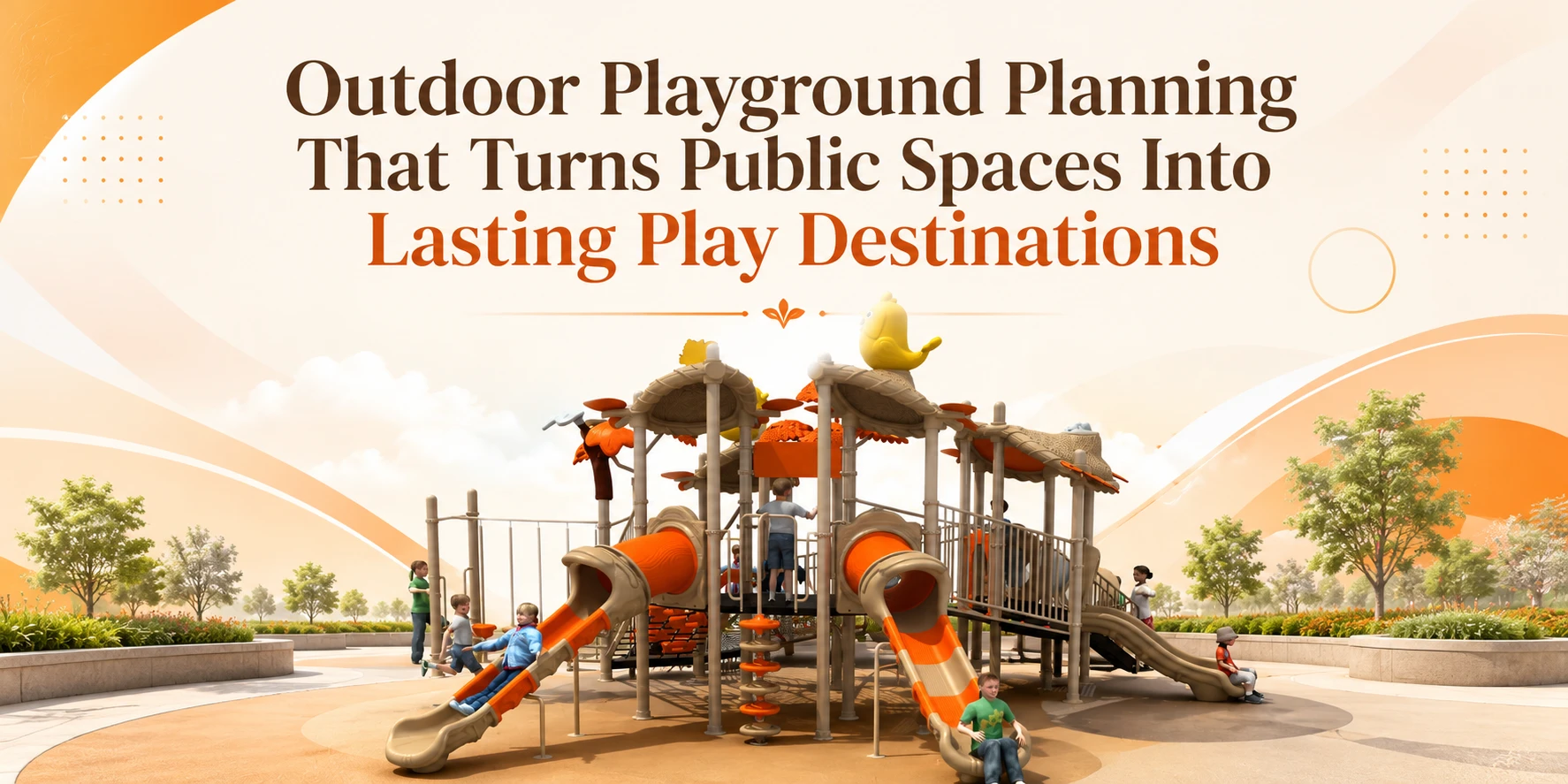
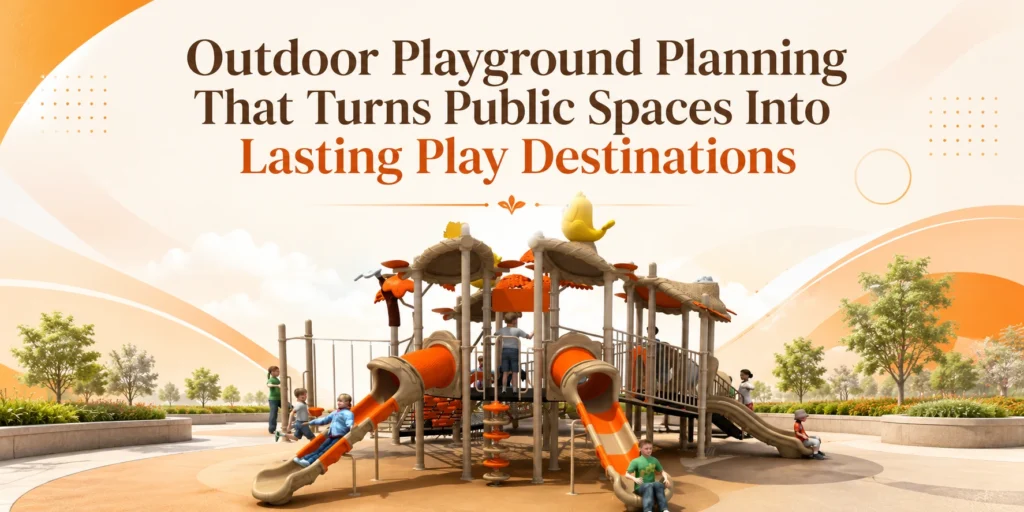
Selecting safe, durable, and engaging outdoor playgrounds is a complex task for municipal, school, and resort planners. You must balance community expectations, budget constraints, and strict regulatory standards like EN1176. A poor choice leads to safety incidents, early wear, or low usage.
A commercial outdoor playground is a purpose-built recreational area featuring engineered play structures, safety surfacing, and inclusive design elements for public or institutional use. These systems are designed for high traffic, long-term durability, and compliance with accessibility codes.
This guide covers key components, equipment types, benefits, safety protocols, and trusted suppliers for informed decision-making. It serves as a practical playground project planning resource for procurement teams.
Key Components of Commercial Outdoor Playgrounds
A commercial playground is built from three core categories: play structures, safety surfacing, and site amenities. Each must meet durability and safety standards for public use.
Play Structures
Commercial-grade equipment uses specific materials with known lifespans.
- Galvanized steel frames typically last 15–20 years when powder-coated. They resist rust and support high-activity areas.
- Rotomolded plastic slides and decks have a lifespan of 10–15 years. UV stabilisers prevent fading and brittleness.
- Stainless steel fasteners and aluminium components extend structural integrity, reducing replacement cycles.
Common units include multi-play systems with integrated slides, climbing nets, and overhead events. You should plan for a minimum use zone of 1.8 m around each structure.
Safety Surfacing
Surfacing is the most critical safety element and the largest single cost.
- Poured rubber (wet-pour) creates a seamless, wheelchair-accessible surface. It lasts 10–12 years with proper maintenance and requires a depth of at least 25 mm for falls up to 1.8 m (EN1177).
- Rubber tiles offer similar impact attenuation and easier spot replacement. Lifespan is 10–15 years, but tiles can lift in freeze-thaw cycles without correct installation.
- Engineered wood fibre is more affordable (roughly 40% cheaper than rubber) but needs replenishment every 2–3 years. Critical fall height compliance requires a loose-fill depth of 150–300 mm.
Your choice affects not only safety but also long-term maintenance budgets.
Site Amenities
Practical support features determine daily usability.
- Benches and seating placed at least 2 m from play zones allow supervision without obstruction.
- Shade structures (sail shades, roof canopies) reduce surface temperatures by 10–15°C, addressing sun safety requirements.
- Perimeter fencing (0.9–1.2 m high) prevents unsupervised access and keeps play items contained. Clear sightlines are essential for monitoring.
Design Principles
Regulatory compliance and user flow shape the layout.
- ADA / EN1176 compliance governs access routes, platform heights, and handrail requirements. For example, accessible routes must be at least 1 m wide.
- Age separation requires distinct zones: toddler (6–23 months), preschool (2–5 years), and school-age (5–12 years). Equipment heights and fall zones differ significantly by age group.
- Flow means placing high-activity structures (slides, swings) away from quiet areas (sand play, sensory panels). A well-planned sequence reduces conflicts and maximises play value.
A thorough playground site planning process will integrate these components into a cohesive design. The next section details the specific equipment types best suited to each age group and environment.
Types of Outdoor Playground Equipment for Parks and Schools
Playground equipment divides into five primary categories: swings, slides, climbers, multi-play systems, and inclusive/accessible units. Each type serves a distinct age group, demands specific fall-zone dimensions, and uses materials engineered for commercial traffic.
| Equipment Type | Typical Age Range | Minimum Safety Zone | Common Material |
|---|---|---|---|
| Swings (belt, bucket, adaptive) | 2–12 years | 2 × swing height front/back, 1.8 m sides | Galvanised steel frame; rubber or plastic seats |
| Slides (straight, spiral, tube) | 2–12 years | 1.8 m beyond exit, 1.2 m sides | Rotomoulded polyethylene slide bed; stainless steel for high-traffic |
| Climbers (net, arch, rock) | 5–12 years | 2.4 m from all sides | Aluminium or steel frame; HDPE panels; polyester climbing ropes |
| Multi-play systems (platforms, bridges, tunnels) | 2–12 years (zoned) | 2.4 m perimeter zone plus overhead clearance | Galvanised steel uprights; rotomoulded decks; stainless steel hardware |
| Inclusive/accessible (wheelchair-friendly, sensory panels) | 2–12 years | Level access path of 0.9 m minimum; same fall zone as equivalent unit | Compression-moulded rubber; low-maintenance plastics; contrasting colours for visual cues |
Swings come in three common seat types: belt (5+ years), bucket (2–4 years), and adaptive moulded seats for wheelchair transfer or full-body support. Bucket swings reduce fall risk for toddlers. Adaptive models often include harnesses and wider frames to allow side-by-side use. All commercial swing frames must anchor in concrete footings with a minimum 10 cm diameter post.
Slides vary by form. Straight slides offer the simplest exit path for young children. Spiral slides save footprint but require a minimum platform height of 1.8 m for full rotation. Tube slides provide enclosed sliding – favoured in temperate climates for added shade – but need ventilation slots to prevent heat build‑up. The slide bed should be roto‑moulded polyethylene or continuous stainless steel for high‑wear public parks.
Climbers include net structures (polyester rope on steel cable), arch climbers (curved aluminium beams with footholds), and rock‑wall panels with textured polyurethane holds. All require a minimum 2.4‑metre unobstructed fall zone. Net climbers suit 5‑12‑year‑olds and support multiple users simultaneously, but inspect rope tension quarterly.
Multi‑play systems bundle slides, climbers, bridges, and tunnels onto a single steel platform. They allow age‑zoned play areas within one footprint – a common request in your RFQ checklist for schools with mixed primary age groups. The total fall zone combines each component’s clearance, so plot your site plan before specifying.
Inclusive equipment uses wheelchair‑accessible transfer decks, sensory panels with bright contrasting colours and textures, and ground‑level activity games. Typical space: a wheelchair‑friendly swing bay needs an extra 1.2 m of hard‑surfaced access path. Ramps replace steps on multi‑play systems, and rubberised surfacing must extend to the entire fall zone for safety compliance.
Commercial‑grade durability means galvanised or powder‑coated steel frames with no exposed fasteners, UV‑stabilised polyethylene that resists fading for 10+ years, and stainless steel swing chains. When adding these categories to your playground installation checklist, verify that each unit carries EN 1176 or ASTM F1487 certification and includes a manufacturer’s declared impact‑attenuation test report for the specified surfacing.
Benefits of Investing in Commercial Outdoor Playgrounds
The clearest ROI for a commercial playground is measurable park usage. Municipalities that replace outdated equipment with modern, inclusive structures report a 40% to 60% increase in daily foot traffic within the first year. That higher dwell time directly boosts community engagement and, for resorts or holiday parks, on-site spending.
Physical and cognitive gains for children are backed by longitudinal data. A 2018 study in the Journal of Play found that children using multi‑play systems with overhead climbing elements improved upper‑body strength by 22% over six months compared to a static‑equipment control group. The social‑interaction effect is equally strong: playgrounds designed with group‑swing banks or cooperative play panels reduce solitary play time by roughly 30%, according to Play England’s 2019 audit.
From a procurement standpoint, compliant equipment saves long‑term costs. Units certified to EN 1176 or ASTM F1487 with galvanised steel frames and UV‑stabilised HDPE panels typically require only an annual inspection and minor part replacement over a 15–20 year lifespan. That durability contrasts sharply with resin‑based “domestic‑grade” sets that fail within five years. When building a school playground project planning budget, factor in the lower total cost of ownership: commercial‑grade surfacing such as poured‑in‑place rubber can reduce annual replacement spend by up to 70% versus loose‑fill bark.
Finally, property‑value uplift is a quantifiable benefit. A 2020 University of Tennessee study of 350 apartment complexes showed that those with a commercial playground commanded 8% higher rental premiums than complexes with only basic amenity space. For public parks, a playground safety surfacing plan that meets impact‑attenuation requirements also protects against litigation risk – another hidden cost saving that strengthens the business case for investment.
Outdoor Playground Safety and Installation Best Practices
Before you lay a single footing, confirm the critical numbers. The required surfacing depth depends on the critical fall height of the highest component. For loose‑fill materials (engineered wood fibre, rubber mulch) you need 200–300 mm uncompressed depth to meet ASTM F1292 or EN1177 impact attenuation. Unitary surfaces (poured rubber, tiles) require 25–50 mm, but only if the substrate is perfectly levelled and drained.
Common mistake: Skimping on drainage. Waterlogged loose‑fill compacts and loses its shock‑absorbing capacity. Install a geotextile layer and 100 mm of gravel sub‑base before the surfacing.
A fall zone must extend at least 1.8 m from the outermost point of static equipment (swings need a front-to-back zone double the suspension height). Space independent structures 2.4 m apart to prevent children colliding between activities.
Anchoring is non‑negotiable. Galvanised steel posts set in 400×400 mm concrete footings, sunk below frost line, resist uplift and tipping. After installation, torque‑test every bolt and confirm structural stability per the manufacturer’s manual.
Set an inspection schedule: monthly visual checks (exposed concrete footings, cracked mouldings, worn bearings) plus annual comprehensive inspection by a certified playground safety inspector.
Closeout documentation must include certificates of compliance, as‑built drawings showing surfacing contours and fall zones, and material test reports. Keep these on file for your insurer and any future refurbishment.
Recommended Outdoor Playground Equipment Manufacturers and Suppliers
When selecting a supplier, look beyond the brand name. Certifications (ASTM, EN1176, TÜV) confirm safety compliance. Customisation options determine how well the playground fits your site’s age zone layout and theme. Global delivery capability and warranty length affect total cost and long-term support. The following manufacturers consistently meet these criteria for projects of any scale, budget, and climate.
- Playworld – Offers full ASTM/EN1176 compliance and themed customisation, including inclusive designs. Warranty covers structural components for 15 years. Global delivery with regional installers.
- Landscape Structures – Known for inclusive playgrounds with sensory panels and wheelchair-accessible play decks. Certifications include TÜV for European markets. Custom colour palettes and age-specific zones. Warranty up to 15 years on steel and plastic.
- Kompan – Provides comprehensive design services, including playground age zone layout optimisation. Products tested to EN1176 and ASTM standards. Global network; warranty varies by component (typically 5–10 years). Offers nature-inspired themes for climate resilience.
- JQ Playground – Specialises in custom designs for parks and schools. Certifications: ASTM, EN1176, TÜV. Customisation includes colours, themes, and inclusive elements. Warranty of 10–15 years depends on material. Global shipping capacity with installation guidance.
- Robertson PlaySystems – UK-based manufacturer with EN1176 certification. Emphasis on hardwood and timber playscapes, ideal for natural settings. Custom designs for age zones. Warranty: 20 years on timber, 5 years on swings. Suitable for schools and community parks.
For any chosen supplier, request playground closeout documents as part of the handover package. These certificates and as‑built drawings simplify future maintenance and compliance checks.
About JQ Playground – playgroundprojectguide.com
JQ Playground (Wenzhou Jiqi Amusement Equipment Co., Ltd.) is a children’s playground equipment manufacturer founded in 1993. The company provides design, customization, large-scale manufacturing, sales, installation guidance, and after-sales support for outdoor playgrounds, indoor playgrounds, soft play, water playgrounds, PE board playgrounds, kindergarten furniture, outdoor fitness equipment, pet playgrounds, and playground facilities. Approved company facts include 180+ employees, a large Wenzhou production base, 20+ production lines, 55 production machines, ISO/BSCI/EN1176/EN71/ASTM/CPC/CPSIC certification references, 100+ patents, free design support, OEM/ODM capability, trial installation before shipping, export experience, and one-year quality warranty.