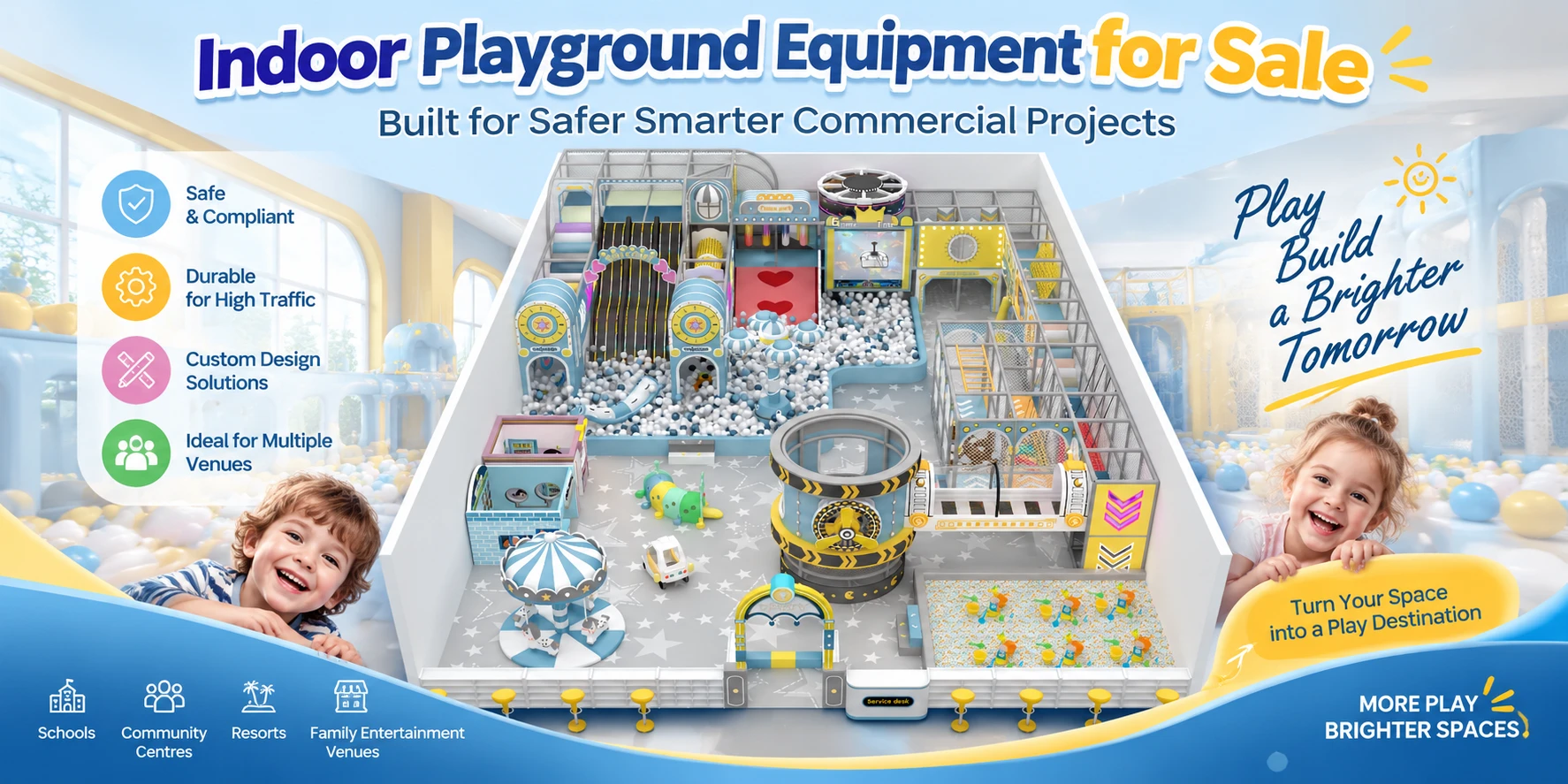
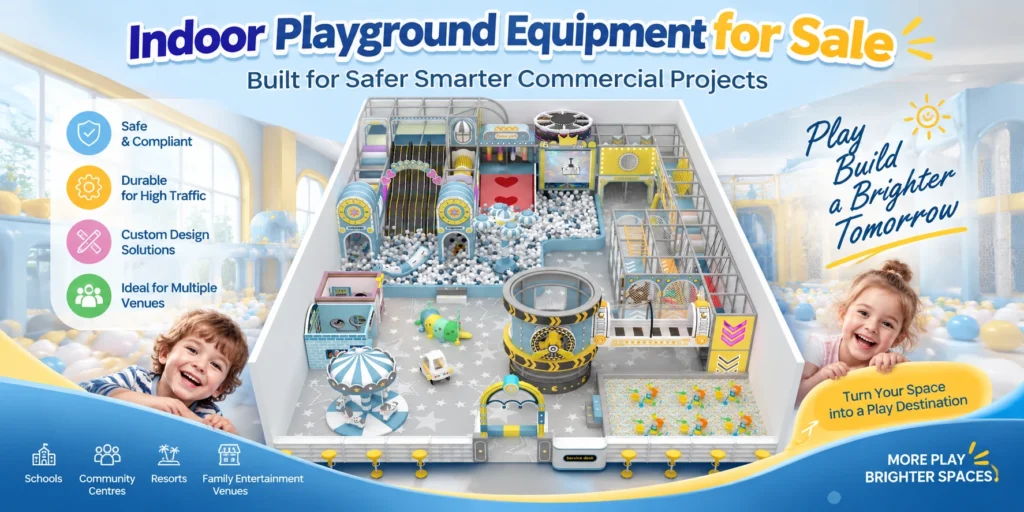
Municipal park teams, school planners, resort developers, and community operators all need equipment that survives daily public use — while staying within budget, safety codes, and tight space constraints. Contractors face the same pressure as they price and schedule the build. Commercial indoor playground equipment refers to heavy-duty, code-compliant play structures designed for high-frequency public use in schools, parks, community centres, resorts, and indoor family entertainment venues. The specification choices you make influence safety liability, maintenance costs, and visitor retention for years. This guide explains product types, safety requirements, cost benchmarks, design planning, and vendor selection criteria.
Indoor Play Structure Types by Commercial Venue and Age Group
Match equipment categories to age range, supervision model, and visitor flow rather than floor area alone.
Soft play modules — low-height foam shapes designed for toddler zones in day-care centres and nurseries, where falls are frequent and ceilings may sit under 3 metres.
Multi-level modular playsystems — platforms, slides, and crawl tunnels suited to community centres and resort indoor playgrounds. Typical commercial footprints measure around 12ft x 16ft, and most two-storey configurations require 8–16ft ceiling clearance.
Ball pits and foam blocks — reliable under-5 attractions, but specify commercial-grade shells with removable liners for daily cleaning.
Climbing walls, net structures, trampolines, and obstacle courses — appeal to older children, so family entertainment centres should set separate age zones with wider fall margins.
Specialty themed components — castle, nature, or nautical pieces that reinforce venue identity.
During playground site planning, confirm slide run-out distances and supervision sightlines before shortlisting any category.
Safety Standards and Compliance Requirements for Commercial Indoor Installations
Public-use play equipment carries different supervision, liability, and access risks than residential gear, so commercial-grade compliance is non-negotiable. Run this checklist before you sign:
- Confirm the structure meets ASTM F1918 for soft contained play equipment, plus IPEMA certification where your supplier or venue requires it.
- Request fall-surface test reports showing impact attenuation for the installed height and matting specification.
- Verify entrapment, pinch-point, and impact-hazard prevention against current code language.
- Check fire-retardant ratings on foam, netting, and fabric components for high-turnover public facilities.
- Review ADA access integration, including transfer platforms, ramps, and clear floor space.
- Ask about sanitation components—splash-proof liners, wipe-clean surfaces, and antimicrobial options for soft play.
Request test reports, certificates, and maintenance instructions in writing from suppliers. Then compare those documents against your venue’s liability and inspection requirements before moving to budget planning.
Commercial Indoor Playground Cost Benchmarks and Budget Variables
Commercial indoor playground equipment pricing is rarely published as retail lists. Most manufacturers publish estimated cost-analysis guides and request project details before quoting, because structure height, footprint, and finish choices move the figure substantially. Use the benchmarks below as directional planning anchors.
| Project Type | Typical Equipment Scope | Approximate Budget Range | Main Cost Drivers |
|---|---|---|---|
| Daycare or soft-play room | Low-height soft modules, toddler slide, ball pit | £5,000–£30,000 | Floor area, foam density, impact surfacing |
| Community or recreation centre indoor zone | Multi-level playsystem with slides, tunnels, and climbing panels | £30,000–£100,000 | Structure footprint, ceiling height, fall protection |
| Resort or family entertainment centre multi-zone area | Age-zoned towers, custom theming, interactive features | £100,000–£400,000+ | Customisation level, total square footage, installation logistics |
Treat these ranges as indicative only, because indoor playground equipment commercial projects are normally custom-quoted after a site assessment.
Key budget variables:
- Equipment height and number of play decks
- Customisation level: standard modular ranges cost less than bespoke themed structures
- Square footage in the play zone
- Playground safety surfacing plan, including impact mats and floor preparation
- Freight distance and delivery access
- Installation, electrical, and structural work
- Contingency reserve of roughly 5–10%
Space Planning and Custom Indoor Playground Design Options
Before comparing suppliers, document your site’s dimensions and operational constraints. Measure ceiling height, column positions, door widths and clearance zones around planned structures. Define age zones early so toddler soft play sits apart from multi-level units for older children. Decide between modular and custom-themed builds: modular works for standard footprints, while bespoke structures suit branded or nature-inspired designs for parks and resorts. Plan entry and exit flow to avoid bottlenecks, and keep sightlines open for supervision. Accessible pathways should link play areas without crossing fall zones. Most commercial suppliers provide CAD layouts, 3D renderings or virtual walkthroughs during design, and some engineer custom-fit structures for irregular floor plans.
Use this checklist before requesting quotes:
- Ceiling height, column spacing and clearance areas
- Age-zone layout and supervision sightlines
- Entry and exit flow plus accessible route
- Modular or custom-themed specification
Sourcing Channels and Supplier Evaluation Criteria for Project Teams
Source equipment manufacturer-direct, through authorised dealers or distributors, or via formal project procurement routes. Each channel suits a different project scale, so confirm which one provides design support and post-installation service in your area.
Evaluate suppliers on:
- Commercial-grade customisation ability
- Installation support and realistic project timelines
- Replacement parts availability and after-sale service
- Safety documentation and current compliance certificates
- References from similar public or hospitality projects
- Product line breadth and proven playground age zone layout capability
A thorough RFQ should request site-specific equipment layouts, a full bill of materials, compliance certificates, warranty and maintenance terms, and confirmed lead time. Choose only vendors who supply these playground closeout documents. That paper trail protects your team once installation is complete and future inspections begin.